








Is the Matcha You’re Drinking Actually Good?
Why the Leaf Matters
Matcha has quietly moved from the tea room into everyday life. For many, it is now a daily ritual rather than a ceremonial indulgence. Yet despite its global popularity, very few people have experienced what authentic, craft-produced Matcha is meant to taste like. Demand continues to rise, projected to reach around USD 7.43 billion by 2030[1], but quality has not kept pace. Much of what is sold today is little more than powdered green tea, lacking the shading, milling, and storage practices that define true Matcha. If this craft is to be preserved, the industry must become more precise, more transparent, and more honest about what quality really means.
Understanding Matcha Cultivars
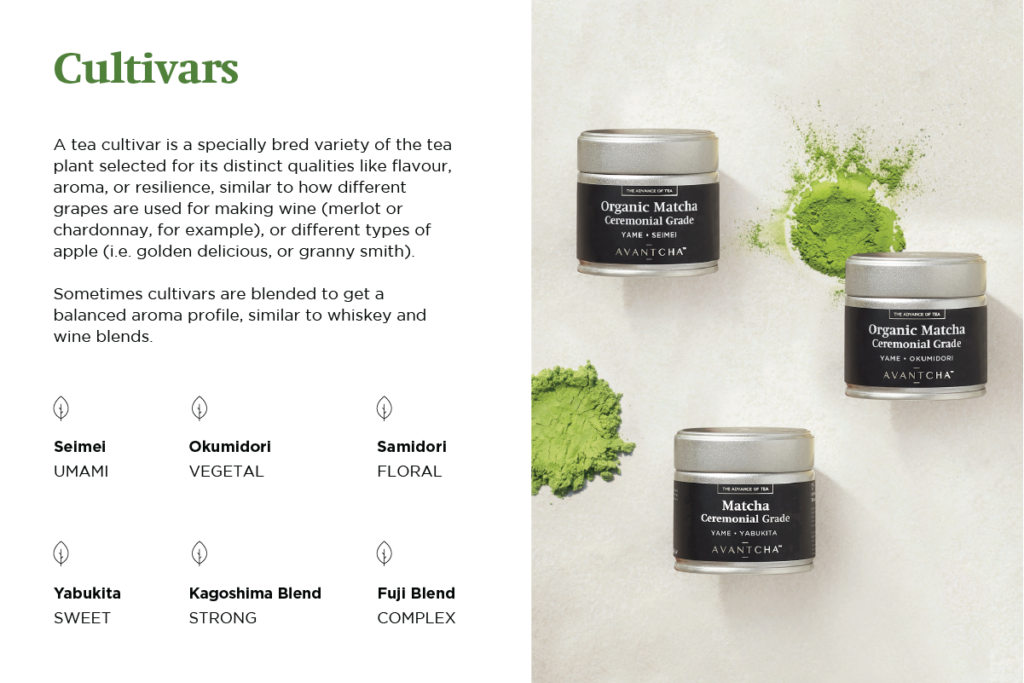
Any meaningful conversation about Matcha quality must begin with the cultivar. Cultivar is not a technical footnote; it is the foundation of aroma, colour, sweetness, texture, and overall character. Some cultivars naturally express a soft, creamy sweetness, while others lean toward vegetal or lightly astringent notes. The easiest way to understand this is to think of apples: Gala and Granny Smith belong to the same fruit family, yet their flavour profiles are unmistakably different. Matcha exists along a similarly broad spectrum, which is why AVANTCHA works with multiple cultivars to highlight the diversity that authentic, craft-produced Matcha can offer.
One of the most common misconceptions around Matcha quality is the assumption that single cultivars are inherently superior to blends. In reality, many ceremonial-grade Matcha are intentionally blended, including AVANTCHA Fuji, which remains one of our most popular ceremonial offerings. Blending, when done well, can create a refined and balanced profile, just as a single cultivar can deliver exceptional clarity and character. Quality is not defined by whether a Matcha is blended or single cultivar, but by how the leaves are grown, shaded, harvested, processed, and stored.
How Your Matcha is Made
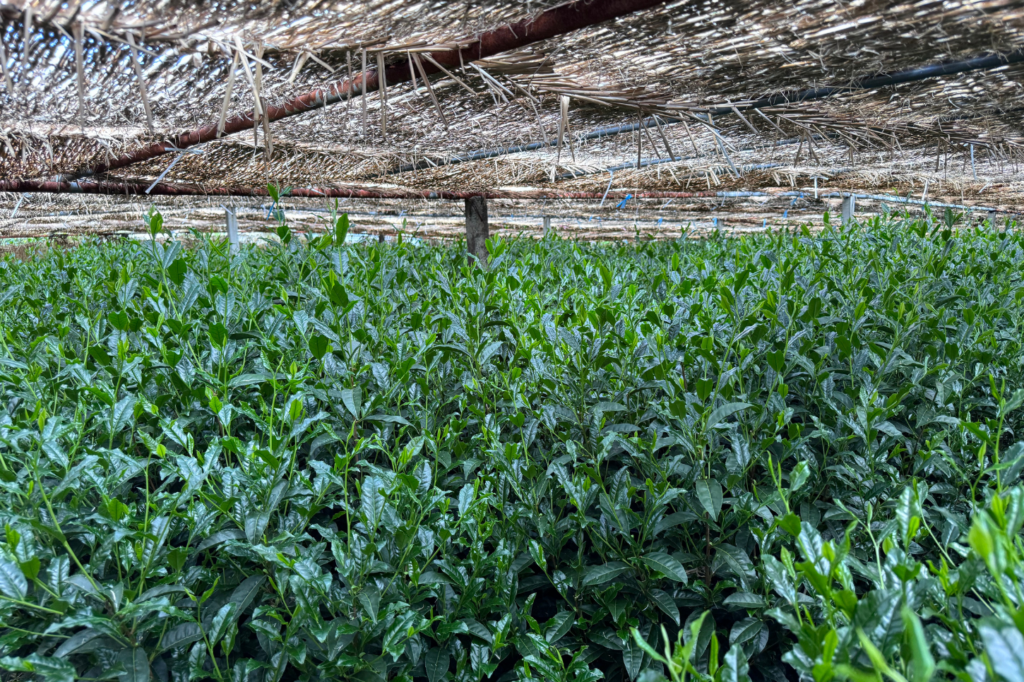
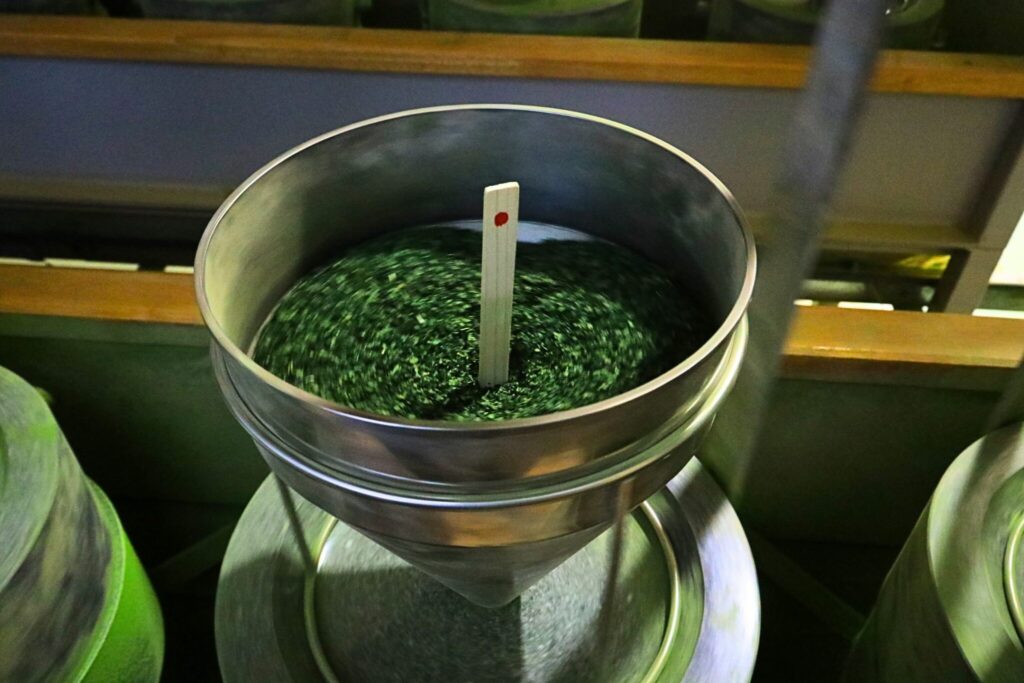
That process demands precision at every stage. Tea plants are shaded for around four weeks to increase chlorophyll levels and preserve amino acids such as L-theanine, which contribute to umami and a calm, focused state. Harvesting today is largely mechanised, with hand plucking reserved for very small quantities of top ceremonial releases. When new tea fields are planted, bushes require approximately three years to mature. Existing fields, however, can be shifted from producing sencha or gyokuro to tencha immediately, even one day before harvest, depending on market demand. After steaming and drying, milling becomes the defining step. Traditional stone milling remains preferred for high-grade ceremonial Matcha, but modern jet and bead milling technologies have advanced significantly and can now produce excellent results at scale.
Keeping Matcha at Its Best
Ironically, the moment Matcha is milled is also when its greatest vulnerability begins. Exposure to oxygen, heat, or light rapidly degrades quality, and this is where many products fail long before they reach the consumer. At AVANTCHA, Matcha is sealed in Japan immediately after milling under nitrogen, stored cold, and transported refrigerated to preserve colour, aroma, and nutrients. When Matcha is kept unrefrigerated or stored in glass containers, oxidation can occur within days.
The Importance of Relationships
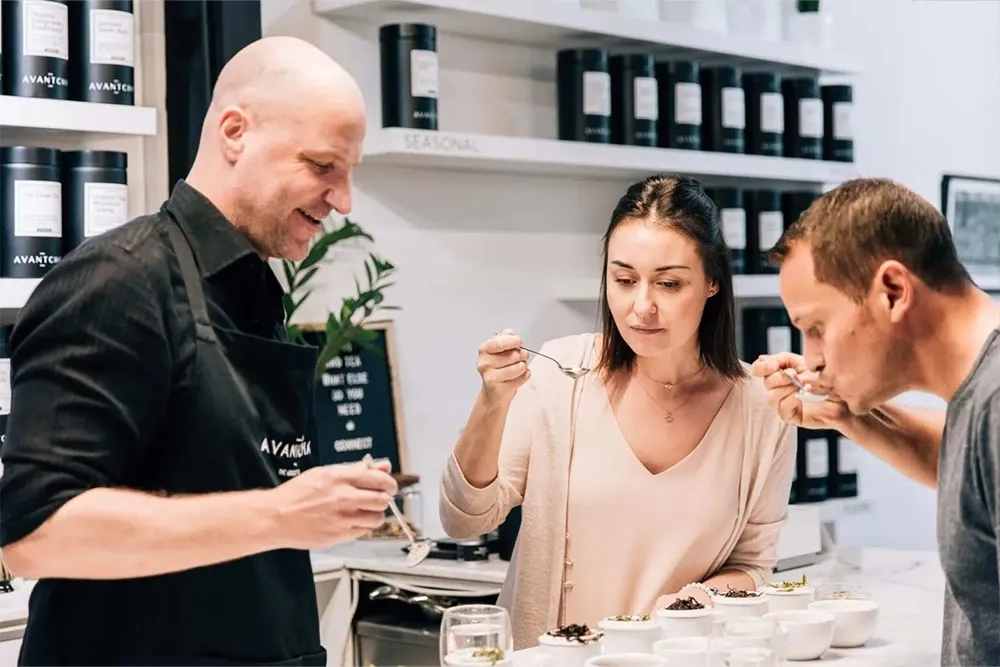
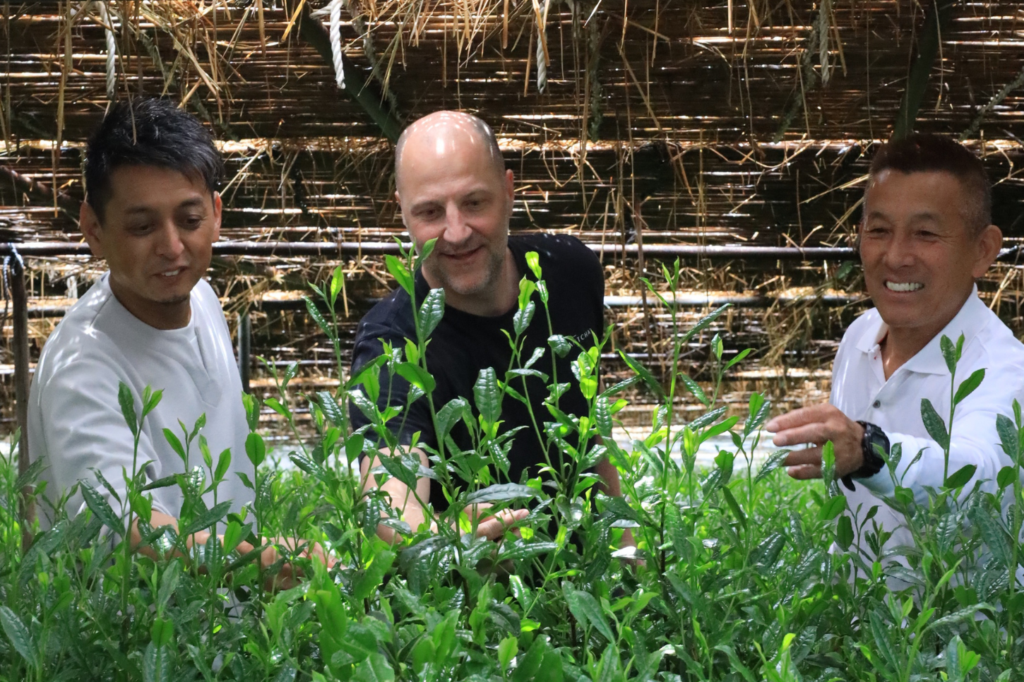
Each year, I visit the growers and producers we work with, many of whom are multi-generational families in Uji, Kagoshima, Shizuoka, and Yame. These long-term relationships are increasingly important as the industry faces mounting pressure. The average age of Japanese tea farmers now exceeds 60. Labour shortages have driven further mechanisation, while climate change has introduced spring frosts, extreme heat, and irregular rainfall. Several regions experienced lower yields this year. Meeting global demand without compromising quality will require both traditional knowledge and a capacity to adapt.
Quality From Beginning to End
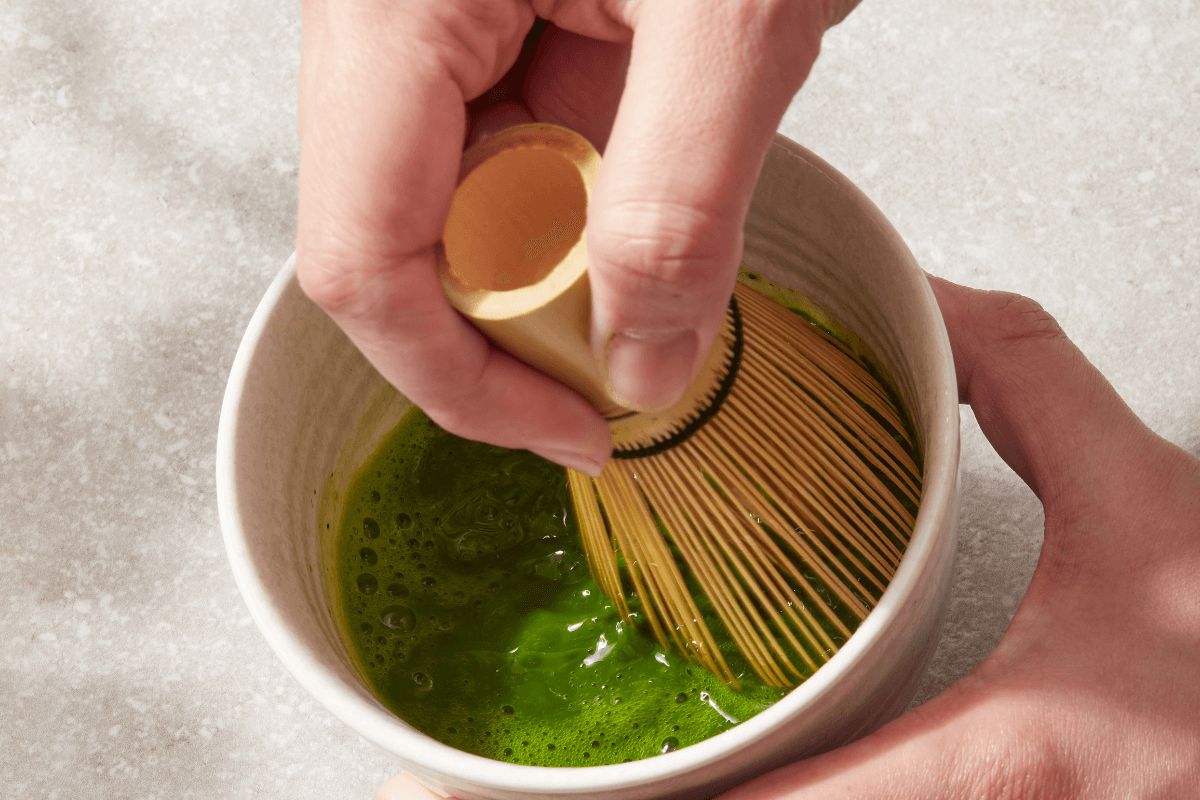
Even when Matcha is produced with the utmost care, its quality can still be lost in the final stages. Storage, handling, and preparation matter as much as cultivation. Water that is too hot burns the tea and creates bitterness; incorrect powder-to-water ratios result in Matcha that is either overly dense or too thin. Storing powder at room temperature or in transparent containers accelerates degradation. Adding sugar or syrups to mask bitterness is often a sign of poor-quality tea or poor preparation. Properly prepared, high-quality Matcha should be naturally smooth, balanced, and gently sweet.
Knowing Your Matcha
Transparency is Key
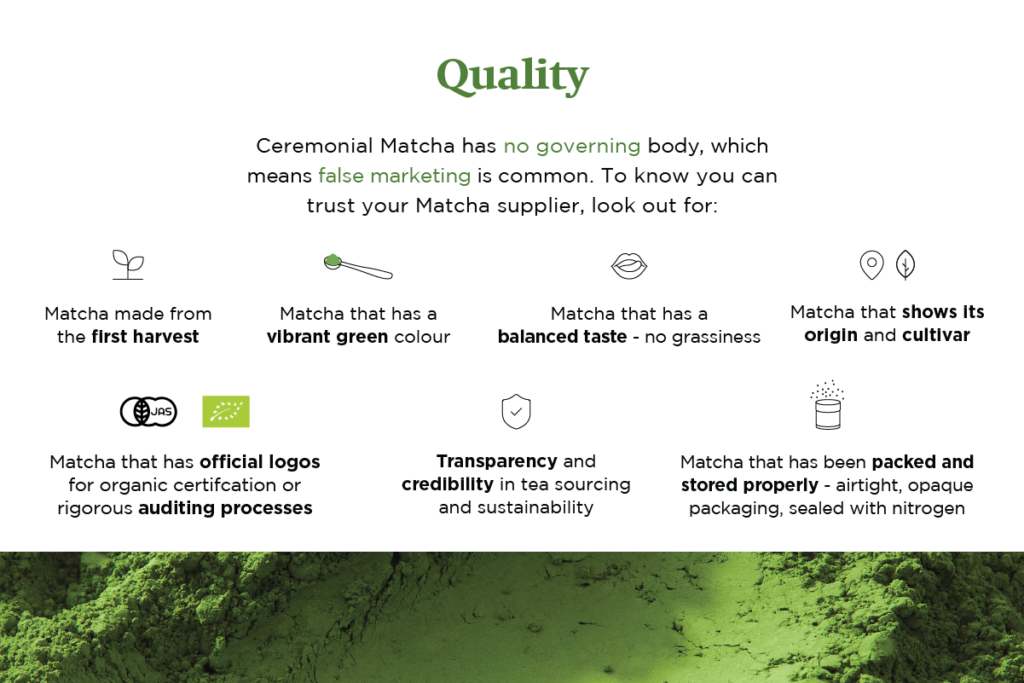
For consumers, identifying authentic Matcha requires a critical eye. Japan remains the benchmark for genuine, craft-produced Matcha. Transparent harvest information, cultivar details, and certifications such as JAS, USDA, or EU Organic offer important signals of credibility. Ceremonial Matcha may be blended or a single cultivar, and both can be premium. Top ceremonial selections often reflect careful shading, fine milling, rare hand harvesting, and cold storage.
One Core Principle
One principle remains constant: true quality cannot be inexpensive. If a label lacks clarity or the price seems unusually low, it is worth questioning. Authentic Matcha is not simply a beverage. It represents agriculture, craftsmanship, and culture shaped by generations of dedication. When we take the time to understand its origin, cultivar, and process, we elevate not only our own experience but also help protect a craft that has defined Japan’s tea culture for centuries.
[1] https://economicsdeclassified.wordpress.com/2025/09/22/sipping-into-the-matcha-market-a-brew-of-trends-and-trade/
Extra Reading
For those curious to go deeper, our Journal brings together guides and stories that explore the craft, culture, and future of tea.
More from the journal